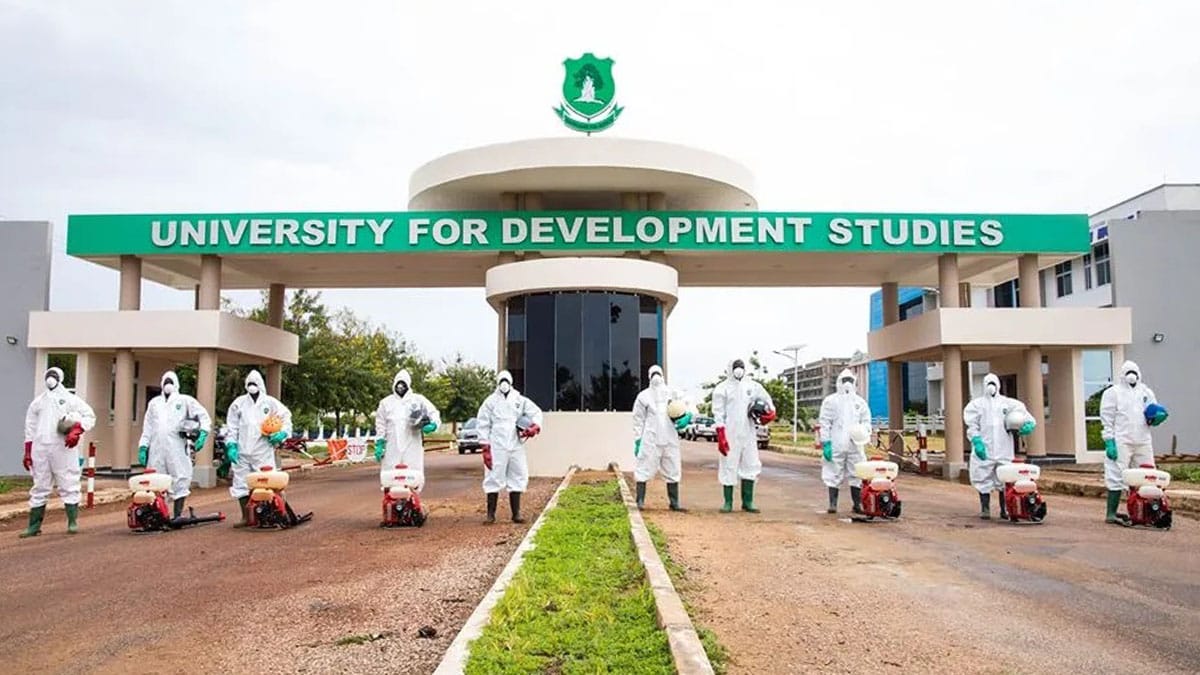
The University for Development Studies (UDS) has hosted a one-day dissemination workshop by the Waste Reduction and Management by Implementing Circular Economy in Western Africa (WARM) Project, aimed at sharing research findings on the state of solid waste management within academia and industry across the sub-region.
The workshop brought together academics and journalists to discuss challenges and opportunities in improving waste management systems in Western Africa.
The WARM Project, co-funded by the European Union under the ERASMUS Plus (ERASMUS-EDU-2024-CBHE-STRAND-2) Programme, is being implemented by a consortium of partners from Ghana, Burkina Faso, Sierra Leone, Italy, Portugal and Romania.
Get the latest news, updates by joining our WhatsApp channel here: Join on WhatsApp.
Findings presented at the workshop revealed that Ghana, Burkina Faso and Sierra Leone currently lack specialized academic programmes dedicated to solid waste management.
The study also highlighted limited technical skills and inadequate investment in the sector as major setbacks to effective waste management in the partner African countries.
Speaking at the event, the WARM Project Lead at UDS, Dr. Abubakari Zarouk Imoro, called for increased investment in human capacity development and modern technology to ensure effective management of both solid and liquid waste.
He emphasized the need for strict enforcement of Ghana’s environmental sanitation laws, noting that although sanitation by-laws exist, weak compliance and poor enforcement continue to undermine waste management efforts.
According to him, strong enforcement combined with sustained public education would significantly reduce environmental pollution and sanitation-related diseases.
Dr. Imoro further urged journalists to remain well informed about waste management issues and to prioritise sanitation in their reportage.
The Dean of the School of Engineering, Engineer Professor Maxwell Anim Gyampo, emphasized the need for strict enforcement of Ghana’s environmental and sanitation laws.
He noted that although sanitation by-laws exist, weak adherence and enforcement continue to undermine efforts to improve waste management.
Moderating the programme, the Director of Public Relations at UDS, Abdul Hayi-Moomin, echoed the call, encouraging media practitioners to shift greater attention from political reporting to sanitation matters.
He stressed that informed citizens are more likely to maintain clean environments and contribute to preventing sanitation-related diseases.