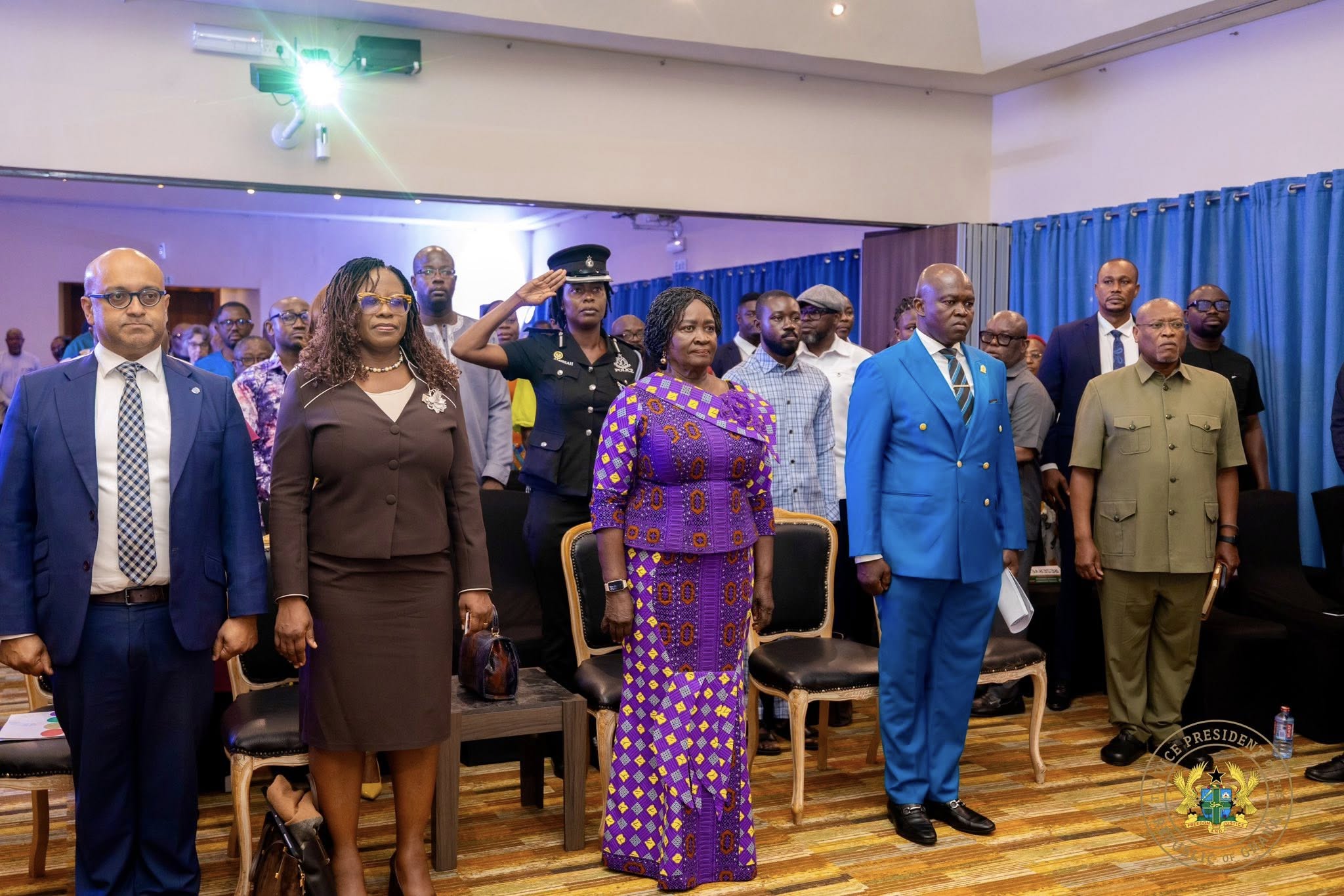
Vice President Jane Naana Opoku-Agyemang has reiterated government’s commitment to prioritising children and adolescents in national development planning, describing it as both a moral obligation and a strategic investment in Ghana‘s future.
She made the remarks after participating in a Strategic Planning Retreat organised by the National Development Planning Commission (NDPC) in collaboration with UNICEF Ghana, under the theme “Planning Together for a Better Future for Children and Adolescents in Ghana.”
The retreat brought together stakeholders from across sectors to align national efforts toward protecting and advancing the welfare of children and young people.
Get the latest news, updates by joining our WhatsApp channel here: Join on WhatsApp.
According to the Vice President, discussions at the retreat underscored the interconnected nature of policies that shape the lives of children, including education, social protection, justice, sanitation, economic policy, climate resilience and governance.
She stressed that the true measure of the engagement would be reflected not in dialogue alone, but in concrete actions that translate policy into impact.
Professor Opoku-Agyemang noted that child poverty and deprivation remain pressing challenges, warning that failure to adequately protect and invest in children today would have long-term consequences for national development. “If we fail our children today, we fail Ghana tomorrow,” she cautioned.
In response to these challenges, she highlighted a number of child-centred reforms currently being advanced by government.
These include the Care Reform Roadmap, which promotes safe, family-based care over institutionalisation, and the Digital Social Services initiative aimed at strengthening child protection through improved coordination and accountability.
Other ongoing interventions include coordinated social services, adolescent safe spaces, community prevention initiatives and the Ghana Against Child Abuse campaign.
The Vice President also reaffirmed government’s commitment to the Early Childhood Care and Development Policy, stressing that investment in children aged zero to eight is critical to long-term national growth and the realisation of Ghana’s demographic dividend.
She emphasised that achieving lasting impact would require stronger collaboration among government institutions, civil society organisations, the private sector, development partners and local communities.
She called for child-centred policies to be fully integrated into all planning frameworks, supported by robust systems for tracking commitments and ensuring accountability.
Professor Opoku-Agyemang concluded by urging stakeholders to sustain coordinated efforts to remove barriers confronting children and adolescents, noting that a deliberate focus on children would help build a stronger, more equitable Ghana.