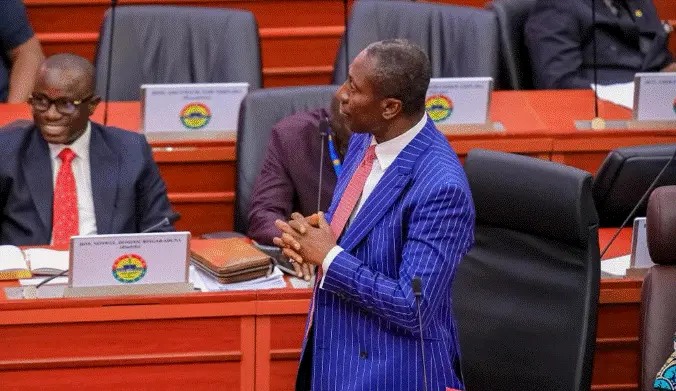
Parliament witnessed a high-tension session focused on the Bank of Ghana (Amendment) Bill and broader demands for government transparency.
The primary contention revolved around a proposed amendment to Section 30, which governs the conditions under which the central bank can provide temporary financing to the government.
The opposition raised concerns that the inclusion of a provision allowing the Bank of Ghana to lend “for the sole purpose of filling a seasonal shortfall of budgeted revenue” could serve as a loophole for printing currency to finance the budget.
Get the latest news, updates by joining our WhatsApp channel here: Join on WhatsApp.
Critics argued this directly contradicts the bill’s stated aim of strengthening fiscal discipline and maintaining stringent limits on government borrowing from the central bank.
“This provision effectively opens the window for printing of currency to finance the budget,” one opposition member warned, noting that Section 30A of the bill limits central bank lending to strict emergency situations, such as natural disasters or public health crises.
The opposition demanded that the “seasonal shortfall” clause be removed to preserve the bill’s original intent.
Government representatives defended the amendment, stating that the term “seasonal” is technical and that the bill’s phrasing, “the bank shall not, is more restrictive than previous legislation.
Frustration was voiced over the prolonged debate on a single clause, with the Majority Leader suggesting such matters should have been addressed in committee sessions rather than on the floor of the House.
Beyond the central bank discussion, opposition members pressed for accountability from the Ministers of Foreign Affairs and Defence regarding the deployment of Ghanaian troops to Benin and support extended to Jamaica.
Criticising what was described as a “stony silence,” members called for clarity on troop numbers, associated costs, and shipments of support materials.
The Foreign Minister later arrived to brief Parliament, with procedural guidance offered for alternative briefings through ECOWAS parliamentary channels.
The session also touched on a broad legislative agenda, including consideration of the GNPC work program, a closed-door report on member facilities, the Sports Fund Bill, and the formation of a committee to review the Auditor General’s financial statements.
Ministerial questions and reports on infrastructure projects such as the Kumasi Expressway were scheduled alongside discussions of parliamentary operations and upcoming statements.
The parliamentary session underscored growing scrutiny over fiscal governance, transparency in international engagements, and the procedural challenges of navigating complex legislation.
Key remarks highlighted the tension:
- On the BOG Bill: “Simply put… the Bank of Ghana can under these new provisions print cash to support the government budget.”
- On ministerial accountability: “We’ve also committed troops to Benin… It’s all a stony silence from the foreign affairs minister, the minister for defence.”
- On procedural concerns: “For nearly 45 minutes we are debating one clause… it appears to be deliberate.”