
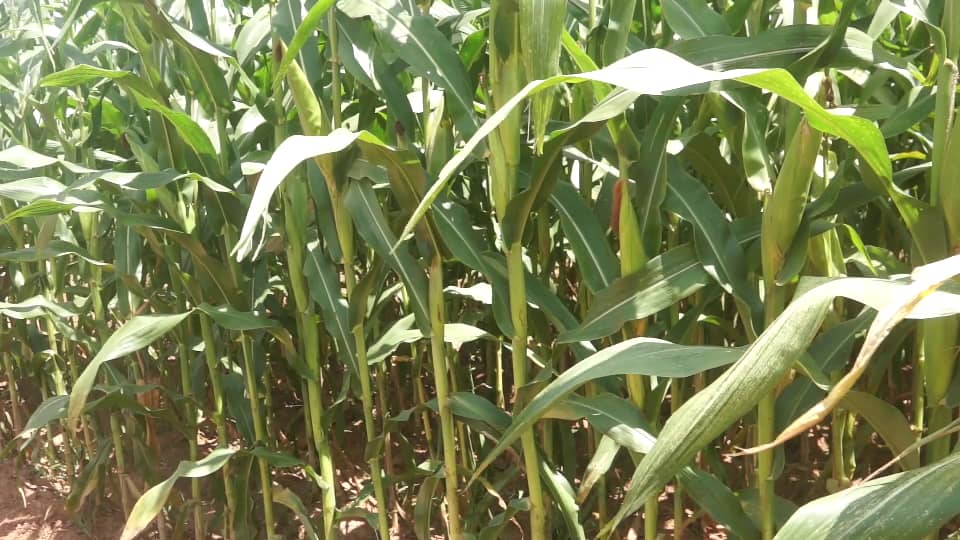
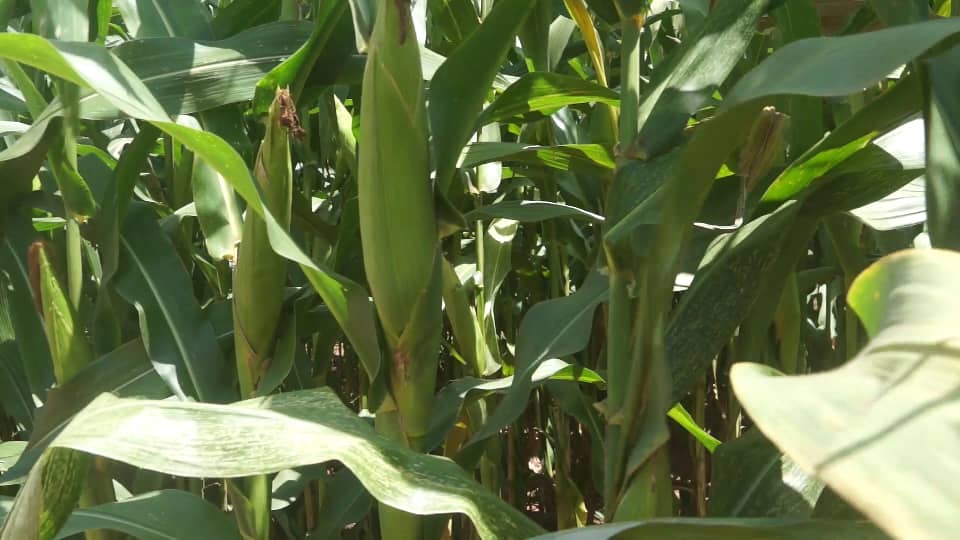
The Savanna Agricultural Research Institute (SARI), under the Council for Scientific and Industrial Research (CSIR), has achieved a breakthrough with the development of hybrid maize seeds that are tolerant to the fall armyworm pest.
This innovation comes as a timely response to the devastating impact of the fall armyworm on maize production in Ghana and across sub-Saharan Africa.
Over the years, the pest has caused significant yield losses and financial hardship for farmers, particularly in the Northern Region, where maize is a major staple crop.
Get the latest news, updates by joining our WhatsApp channel here: Join on WhatsApp.
The new hybrid varieties developed by SARI are expected to help farmers minimise pest-related losses while improving productivity and food security.
Speaking during a field demonstration at the CSIR-SARI Technology Park in Nyankpala, the park’s manager, Dr Charles Nelimor, disclosed that three maize varieties were developed through extensive research and field testing to withstand fall armyworm infestations.
He explained that the new seeds have an impressive yield potential of 6 to 6.6 tonnes per hectare, compared to the lower yields recorded from traditional varieties often destroyed by pests.
According to Dr Charles, the introduction of these improved maize varieties will go a long way toward enhancing farmers’ resilience, reducing the cost of pest control, and ensuring consistent harvests even during challenging farming seasons.
The Council Chairman of CSIR-SARI, Engineer Mark Anthony Taylor, described the achievement as a step forward in Ghana’s quest for agricultural transformation.
He emphasised that science, technology, and innovation remain crucial tools in addressing the challenges of food insecurity and poverty in the country.
Engineer Taylor noted that CSIR-SARI possesses the expertise and facilities to develop improved crop varieties suited to local conditions, adding that the institute’s research is guided by the vision of supporting farmers with practical, sustainable solutions that directly impact their livelihoods.
In his remarks, the Director of CSIR-SARI, at Nyankpala, Dr Francis Kusi, reaffirmed the institute’s commitment to developing more climate-smart and pest-resistant hybrid crops.
He stated that SARI is continuously investing in research to produce varieties that can withstand harsh weather, pests, and diseases.
Dr Kusi added that the new maize seeds are part of a broader initiative to promote sustainable agriculture and increase food availability in Ghana’s northern ecological zone.
He encouraged farmers to adopt the new seed varieties, assuring them that CSIR-SARI will continue to provide technical support and training to ensure maximum productivity from the improved seeds.