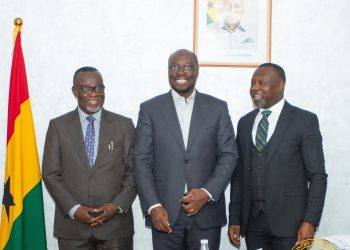
The Executive Secretary of the Importers and Exporters Association of Ghana, Mr Samson Asaki Awingobit, has called on the government to consider local funding options for future port infrastructure projects, including the proposed Keta Port, to reduce dependence on foreign financing and ensure broader Ghanaian participation.
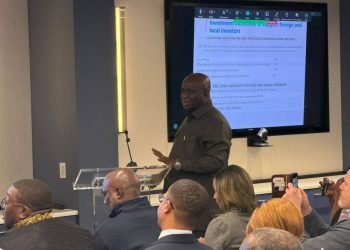
Speaking to the media on the sidelines of the maiden Ghana Transport and Logistics Fair (GTLF) 2025 in Accra on Friday, Mr Awingobit proposed that the government raise funds through the Ghana Stock Exchange by issuing shares to the public. He said such a move would allow citizens to own stakes in strategic national assets while keeping profits within the country.
He cited the Tema Port Expansion Project, executed by Meridian Port Services (MPS), as an example of a highly profitable venture that could have benefited more Ghanaians if locally financed. The $1.5 billion project was funded through loans and investments from several international institutions, including the Bank of China ($231 million), the Industrial and Commercial Bank of China ($144.3 million), and the International Finance Corporation (IFC), which contributed $195 million—its largest port investment in sub-Saharan Africa. The Dutch Development Bank (FMO) and Standard Bank also served as co-financiers.
Get the latest news, updates by joining our WhatsApp channel here: Join on WhatsApp.
Mr Awingobit said MPS had likely recouped its investment and would continue making substantial profits throughout its 25–30-year contract period. He questioned why the government did not opt for local financing mechanisms, arguing that Ghanaians would have eagerly invested if given the opportunity.
“When you invest in port infrastructure, you will never go bankrupt; you will never lose,” he said. “If you open to raise the shares here, Ghanaians will buy — students will even buy, workers will buy — and we’ll pay dividends to them.”
He added that the volume of container traffic in Ghana continues to grow significantly, from about 800,000 containers previously to more than 1.5 million containers by July 2025, with projections to exceed two million TEUs (Twenty-foot Equivalent Units) by the end of the year.
The Ghana Transport and Logistics Fair, organised by the Ministry of Transport in collaboration with Digital Eye, was held under the theme: “Resetting Transport Sector for Connectivity, Innovation and Investment.” The event sought to attract investment, promote collaboration, and showcase innovation to advance Ghana’s transport and logistics industry.
Mr Awingobit commended the government for its efforts in digitalising port operations, which he said had improved efficiency, reduced clearance time, and minimised demurrage costs. “We have top-notch technology and IT solutions that have transformed cargo clearance. What used to take two weeks or more now takes just a few days. If you still pay demurrage, then it’s your fault,” he remarked.
Meanwhile, Mr Eric Dunebo Ang-numbaala, Planning Officer at the Ghana Maritime Authority (GMA), reiterated the Authority’s commitment to transforming Ghana’s ports into smart and green ports. He said the GMA had embarked on several initiatives, including the development of a National Action Plan on Green Shipping, to position Ghana as a leader in maritime sustainability and green transition within the subregion.
A smart or green port incorporates advanced technologies and sustainable practices to reduce environmental impact, enhance efficiency, and improve overall operational performance.