The African Development Bank (AfDB) has been designated as Algeria’s principal international partner in its renewed push for external financing, a decision hailed as a major milestone in the North African nation’s development strategy.
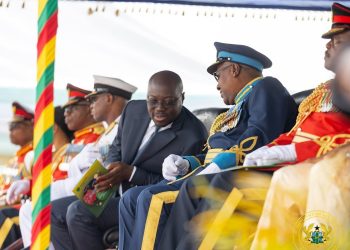
The announcement was made during Dr Sidi Ould Tah’s official visit to Algiers from November 16 to 17, where he met with President Abdelmadjid Tebboune to discuss strategic projects and economic transformation.
Under Algeria’s 2025 Finance Law, the country is opening access to external funding for major national projects, including the construction of the 495-kilometre Laghouat–Ghardaïa–El Meniaa railway line.
Get the latest news, updates by joining our WhatsApp channel here: Join on WhatsApp.
This railway, estimated at $2.8 billion, forms the first phase of the Trans-Saharan Railway corridor, ultimately linking northern Algeria to Tamanrasset and Niger, and establishing a key logistics route for landlocked Sahel countries.
Algeria aims to double its rail network to 10,000 km by 2030, with a long-term goal of 15,000 km, to reduce transport costs, integrate remote regions, and support local processing of critical minerals.
Hydrocarbons and Mines Minister Mohamed Arkab emphasised the government’s plan to increase local transformation of hydrocarbons from 30 percent to 60 percent by 2035 through a $60 billion investment programme running from 2025 to 2029.
Algeria also intends to expand petrochemical, hydrogen, and gas derivative industries while positioning itself as a leader in processing critical minerals, including iron, zinc, gold, and rare earths.
Dr Ould Tah praised Algeria’s industrial ambitions, noting their alignment with AfDB’s vision for Africa’s transformation.
He cited Africa’s competitive advantage in producing battery precursors and called for coordinated efforts to safeguard and develop the continent’s mineral wealth.
The visit also highlighted Algeria’s progress in water and energy security.
The Fouka 2 seawater desalination plant, part of a network of 19 operational plants with five more planned by 2027, aims to meet 60 percent of the country’s water needs by 2030. Algeria’s LPG distribution system, serving 75 percent of households, was showcased as a model for Africa’s clean energy transition.
Interior Minister Saïd Sayoud and Public Works Minister Abdelkader Djellaoui underscored Algeria’s capacity to deliver large-scale projects, citing the completion of 950 km of railway in 24 months using domestic resources.