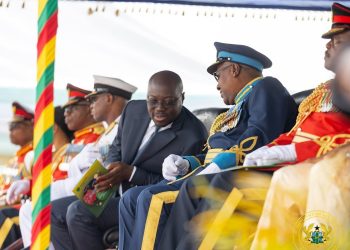
Dr Cassiel Ato Forson, Minister of Finance, has announced a significant overhaul of Ghana‘s local governance system in 2026, with the government allocating substantial resources to strengthen decentralisation, expand social protection programmes, and enhance urban infrastructure across the country.
Speaking during the presentation of the 2026 Budget Statement and Economic Policy under the theme “Resetting for Growth, Jobs and Economic Transformation,” Dr. Forson said the Ministry of Local Government, Chieftaincy and Religious Affairs (MLGCRA) would sustain reforms and interventions benefiting communities, vulnerable households, and local economies across all 261 Metropolitan, Municipal, and District Assemblies (MMDAs).
He noted that GH¢25 million in monthly allowances disbursed to Assembly Members in 2025 would continue into 2026 to ensure active civic engagement and grassroots development.
Get the latest news, updates by joining our WhatsApp channel here: Join on WhatsApp.
To strengthen evidence-based governance, the Ministry completed the 9th cycle of the District Performance Assessment Tool (DPAT) for all MMDAs, with the 10th cycle planned to introduce a performance tracker aligned with the Presidential Project Delivery Unit.
Dr Forson highlighted nationwide consultations for the new National Decentralisation Policy and Strategy (2026–2029), aimed at guiding the next phase of local governance improvements.
Expanded leadership training for 257 newly appointed MMDCEs will be delivered by the Institute of Local Government Studies to enhance public administration, financial management, and citizen engagement.
Following the relaunch of the National Sanitation Day in September 2025, MMDAs intensified enforcement of sanitation by-laws, complemented by major hygiene-related infrastructure projects, including a 500-seater dining hall at the Ho School of Hygiene, rehabilitation of dormitories at the Tamale School of Hygiene, and phase one of a three-storey academic block at the Accra School of Hygiene.
Under the Ghana Productive Safety Net Project 2, the Ministry disbursed GH¢24.23 million in start-up grants to 13,194 beneficiaries and GH¢37.91 million in wages to 65,020 participants in labour-intensive public works.
In 2026, support will expand to 47,303 beneficiaries, with enterprise skills training for 7,208 additional participants.
The Gulf of Guinea Northern Regions Social Cohesion Project will implement 384 new subprojects, complete 138 ongoing works, and provide grants to over 1,000 community groups and producer associations. Community Development Department training will scale up to reach 650 stakeholders and 2,200 women and youth, fostering local economic development.
The Department of Parks and Gardens maintained 1.6 million square metres of landscaped areas in 2025 and will expand to 2.5 million square metres in 2026, introducing climate-smart greening across major cities.
The Births and Deaths Registry recorded 432,925 births and 37,123 deaths in 2025, with plans to double registrations in 2026 through digital systems and mobile campaigns.
Dr Forson emphasised that the MLGCRA remains committed to creating a resilient, inclusive, and people-centred local governance system that strengthens decentralisation and accelerates Ghana’s long-term sustainable development, describing the 2026 allocations as critical to “resetting for growth and driving economic transformation from the community level upward.”