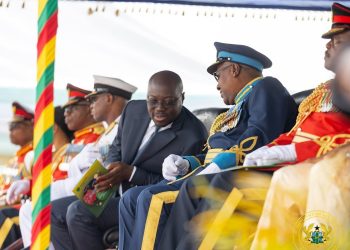
Political commentary emerging from recent analysis has mounted a strong defense of Alan Kyerematen’s stature in Ghanaian politics, portraying him as a disrespected yet formidable political figure whose value is better appreciated by opponents than by his former party, the New Patriotic Party (NPP).
The analysis argues that Kyerematen was marginalized within the NPP despite being widely regarded as a natural successor after the Kufuor administration. According to the commentary, internal party research showed strong delegate support for him, even as narratives outside the party suggested otherwise.
His failure to emerge as the party’s standard-bearer ahead of the 2024 elections is described as a strategic miscalculation that weakened the NPP’s electoral position.
Get the latest news, updates by joining our WhatsApp channel here: Join on WhatsApp.
The treatment of Kyerematen is framed not only as a political error but also as a personal affront.
The commentary recounts incidents in which he was allegedly humiliated and undermined by junior figures within the party, leading him to disengage rather than “come and beg” for relevance.
He is described as a selfless and principled leader who chose dignity over internal party strife.
At the center of the argument is Kyerematen’s perceived caliber. He is repeatedly described as a “global asset,” with experience at the international labour and trade level and a track record as an executive secretary general.
The analysis maintains that Ghana has failed to fully harness his capacity, suggesting that his skills and international standing place him above narrow partisan considerations.
Notably, the commentary claims that Kyerematen enjoys greater respect among political opponents, particularly within the National Democratic Congress (NDC), than within the NPP.
Former president John Mahama is described as recognizing Kyerematen’s political weight and potential, while other figures across party lines are said to hold him in high regard.
This cross-party respect is contrasted with what is described as a lack of appreciation from influential blocs within the NPP.
The analysis further links the NPP’s internal tensions to its handling of Kyerematen, arguing that his sidelining triggered shifting loyalties within the party. Supporters who once backed him are now said to be aligning with figures such as Ken Agyapong, a development framed as a direct consequence of perceived disrespect.
The commentary suggests that Ken Agyapong is effectively “fighting Alan’s battle,” reflecting unresolved fractures within the party.
A recurring theme in the analysis is the importance of perception and political communication. The speaker emphasizes that public image is shaped not only by candidates but also by their surrogates, criticizing what is described as an aggressive and insulting communication style associated with some NPP factions.
The argument is that candidates are accountable for the tone and conduct of those who speak on their behalf, as perception ultimately determines political appeal.
In contrasting Ghana’s two main parties, the commentary portrays the NDC as more deliberate in balancing its internal structure, while characterizing the NPP as constrained by psychological and factional barriers that prevent “fine gentlemen” from rising to the highest levels of leadership.
These dynamics, it argues, have shaped the party’s recent struggles and internal discord.
Looking ahead, the analysis confidently predicts that Alan Kyerematen will remain a central figure in Ghanaian politics, describing him as a “cool job” for the 2028 elections. The commentary concludes that despite past setbacks and perceived d