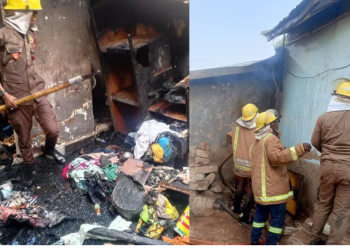
The year 2025 has once again highlighted the destructive power of fire across Ghana. From Accra‘s bustling streets to Kumasi‘s crowded markets, the Ghana National Fire Service (GNFS) recorded 3,595 fire incidents from January to June, slightly higher than the 3,576 cases in the same period in 2024.
While firefighters salvaged over GHS 203 million worth of property, countless families and traders witnessed livelihoods reduced to ashes.
Over the past decade, fire outbreaks have steadily increased, climbing from around 4,500 cases in 2015 to more than 6,400 in 2024. Property losses have surged from under GHS 100 million in 2015 to over GHS 270 million in 2024, underscoring the urgent need for reforms.
Get the latest news, updates by joining our WhatsApp channel here: Join on WhatsApp.
In the first half of 2025, the country recorded 16 deaths and 110 injuries due to fires,a 33 percent rise in deaths and nearly a threefold increase in injuries compared to the same period in 2024.
Tragic events such as the Akyempim fire in November 2025, which claimed seven lives, highlight the human cost behind the statistics.
Markets remain the most vulnerable hotspots. Makola, Kejetia, and Agbogbloshie have repeatedly been engulfed in flames, leaving blackened ruins in their wake.
Traders like Efua Manu in Makola and Amina Seidu in Nima described losing their stalls, savings, and livelihoods, while warehouse owners in Tema lamented imported goods destroyed in the inferno. Each incident reflects systemic weaknesses, unsafe electrical wiring, and rapid urbanisation challenges.
ACFO II Rashid Kwame Nsawu, Greater Accra Regional Fire Commander, warned that obstructed fire hydrants, illegal kiosks, and outdated fire safety laws exacerbate the crisis.
“We cannot fight fire without water, and yet our hydrants are blocked by the very people we are trying to protect,” he noted, calling for legislation to criminalise hydrant obstruction, enforce fire audits in markets, and mandate fire insurance for traders.
Experts also advocate for stricter urban planning, relocation of kiosks, community fire brigades, early-warning smoke detectors, and public education on safe electrical and cooking practices.
Countries like Singapore and Japan offer successful models, where strong building codes, regular drills, and community preparedness have drastically reduced fire incidents.
The GNFS reports that while millions have been salvaged, the economic and social toll of fires continues to ripple through supply chains, businesses, and communities.
ACFO II Nsawu’s stark observation, that life-saving resources are often obstructed by short-term convenience and systemic neglect, serves as a warning: without urgent reforms, the flames will persist, consuming both property and hope.