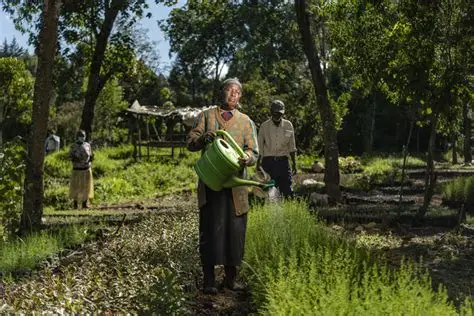
World Vision Ghana and Catholic Relief Services (CRS), in partnership with World Agroforestry (ICRAF), have launched the second phase of the Re-greening Africa initiative to restore degraded lands and strengthen climate resilience in northern Ghana.
The project, funded by the European Union (EU), was launched at Kukpalgu in the Mion District and will be rolled out in Bawku West, Garu, Tempane and Binduri in the Upper East Region, as well as Yendi and Mion Districts in the Northern Region.
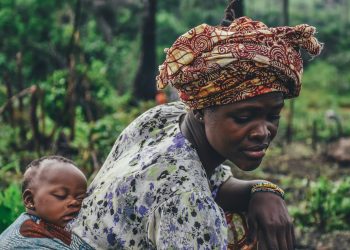
Re-greening Africa Phase II (RA II) aims to support smallholder farmers and pastoral households to adopt profitable, climate-smart land restoration practices while improving policy environments, strengthening local governance, empowering women and youth, and mobilising greater investment toward restoration.
Get the latest news, updates by joining our WhatsApp channel here: Join on WhatsApp.
At least 200,000 additional smallholder households are expected to benefit through improved soil fertility, diversified agricultural systems, enhanced food and nutrition security, increased incomes, and the growth of green and restoration-focused rural enterprises, particularly for women and the youth.
Speaking at the launch, Mr. Rune Skinnebach, EU Ambassador to Ghana, said the EU was confident that degraded lands could be restored when communities were equipped with the right tools and support. “We are here today because we believe in solutions.
The results of the first phase are encouraging, and we know communities can adapt and succeed,” he said.
The Northern Regional Minister, Mr. Ali Adolf John, stressed that the government viewed re-greening as a strategic pathway toward climate resilience, food security and economic transformation. He pledged the support of the Northern Regional Coordinating Council for smooth implementation of the project.
Madam Tinah Mukunda, National Director of World Vision Ghana, noted that the first phase of the initiative supported more than 5,452 households in Ghana and restored an estimated 5,117 hectares of degraded land. She reaffirmed the consortium’s commitment to sustainable restoration, strengthening value chains and improving livelihoods, especially for women and youth.
Dr. Francis Gumah, Head of Programmes at CRS, speaking on behalf of the CRS Country Representative, highlighted the importance of collaboration, citing the Northern Restoration Initiative established during Phase I as a key achievement that enhanced coordination of restoration efforts across northern Ghana.
Re-greening Africa Phase II builds on the success of Phase I, which restored substantial hectares of land and supported over 600,000 households across eight African countries between 2017 and 2023, earning recognition as a United Nations World Restoration Flagship.
Phase II is being implemented by a consortium led by CIFOR-ICRAF, with World Vision, CRS, CARE International, Sahel Eco, and Agronomies et Veterinaries Sans Frontières (AVSF) as partner.