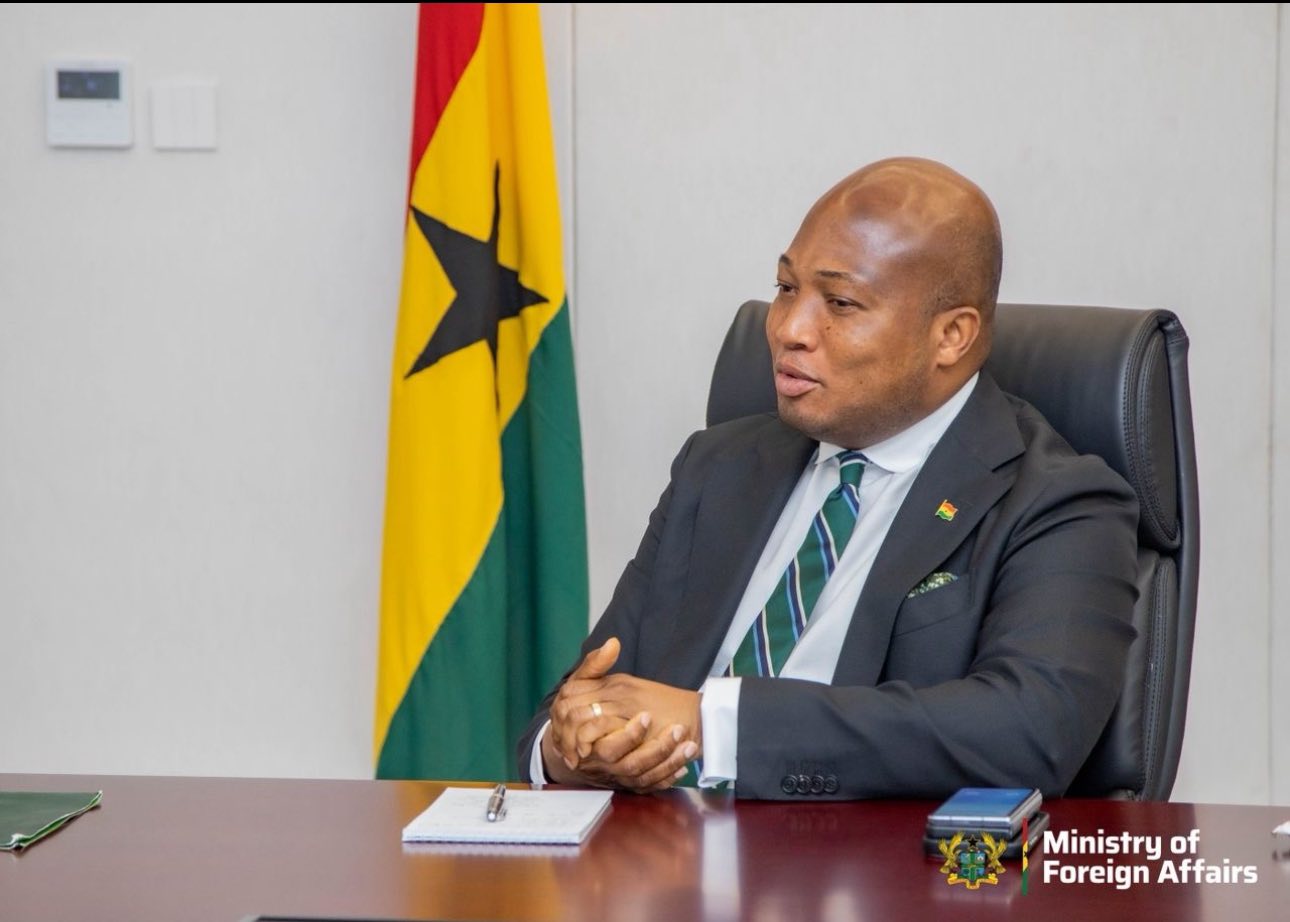
Parliament has approved GHS 1,696,321,083 for the Ministry of Foreign Affairs for the fiscal year ending December 31, 2026, after a fierce debate marked by claims of inconsistency against the sector minister from an opposition MP.
The approved amount is less than half of the over GHS 3 billion the Ministry initially requested.
The critic MP accused the minister of abandoning long-held positions on presidential aircraft purchases, the establishment of new diplomatic missions, and decisions about the Accra International Conference Centre.
Get the latest news, updates by joining our WhatsApp channel here: Join on WhatsApp.
The minister, however, insisted his current views reflect long-term financial prudence rather than political inconsistency.
He argued that the government’s plan to purchase four helicopters and two jets for the Ghana Armed Forces is a strategic investment, contrasting it with what he described as “wasted resources” spent chartering luxury aircraft under the previous administration.
He added that the current President flies commercial, removing the concerns he previously raised about presidential travel.
On diplomatic missions, the MP questioned the minister’s shift on opening embassies in Mexico and Norway.
The minister did not directly address these points in his response, but he strongly defended his stance on the Accra International Conference Centre, saying he opposed demolition, not renovation, and cited a new report confirming the building can be salvaged under budgeted works for 2026.
The minister outlined reforms aimed at tightening value for money across Ghana’s foreign operations, including moving from renting diplomatic properties abroad—which currently costs Ghana $50 million annually, to outright ownership. He said the ministry would pursue this transition transparently.
He highlighted extensive upgrades to passport administration, including a fee reduction from GHS 500 to GHS 350, ICAO-compliant chip-embedded passports, e-tracking, courier delivery, and processing timelines of under 15 days.
He described these reforms as evidence of more efficient governance.
He also briefed Parliament on preparations for the 2026 World Cup, assuring that Ghanaian supporters will receive full consular support without political bias.
In a separate major decision, the House ratified a labour mobility agreement with Qatar, which the minister described as Ghana’s most comprehensive and welfare-focused arrangement yet.
The deal allows Ghanaian professionals, especially in health, tourism, IT, logistics, and engineering, to work in Qatar under regulated and protected conditions.
The minister framed the agreement as “brain gain,” emphasising that the workers will return home with skills and resources that benefit national development. He contrasted this regulated pathway with hazardous, irregular migration routes.
Key protections under the agreement include mandatory employment contracts for all Ghanaian workers (Article 9) and employer-provided allowances for accommodation and medical care (Article 10).
Recruitment will be conducted through a transparent portal similar to the systems used for deploying nurses to Grenada, Trinidad and Tobago, and Barbados.
The debate ended with sharp political exchanges, including a warning from the critic MP that “future prosperity will catch up” with the minister, and a counter-response from the minister insisting his critics should apologise to Ghanaians for previously rejecting positions he now claims are saving the country money.