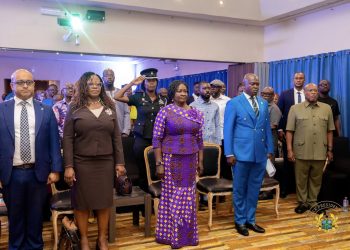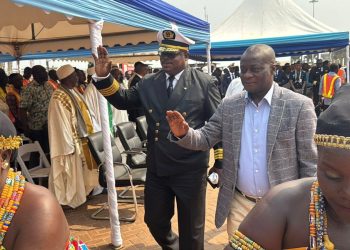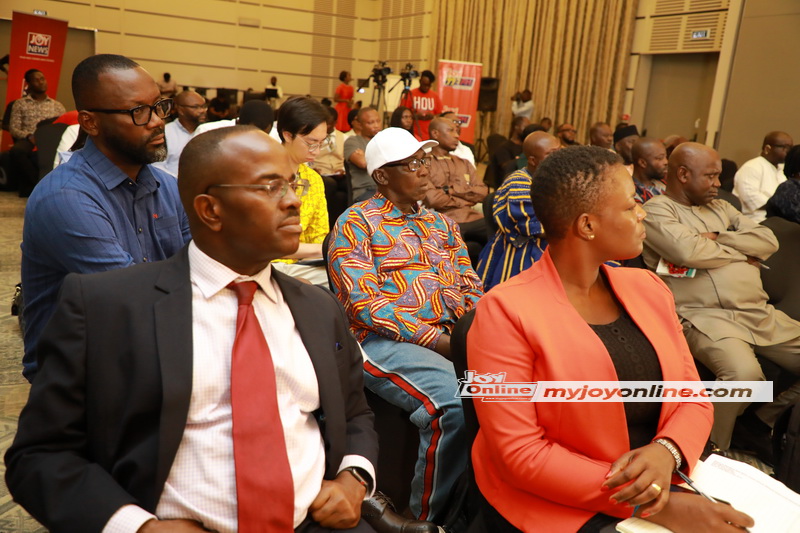
A two-day high-level national dialogue, spearheaded by the Media Foundation for West Africa (MFWA), has opened in Koforidua to forge a national consensus and end political paralysis over Ghana’s illegal mining crisis, popularly known as galamsey.
The stakeholder engagement, taking place at the Eastern Premier Hotel from October 28 to 29, seeks to develop unified, non-partisan strategies to curb the menace that has plagued Ghana’s environment, water bodies, and communities for decades.
Organised by MFWA in collaboration with the National Peace Council, National Commission for Civic Education (NCCE), National House of Chiefs, Christian Council of Ghana, Office of the National Chief Imam, Ministry of Lands and Natural Resources, and the Environmental Protection Agency (EPA), the dialogue aims to dismantle the policy gridlock caused by entrenched political polarisation.
Get the latest news, updates by joining our WhatsApp channel here: Join on WhatsApp.
“This dialogue is a strategic intervention to confront the root causes of inaction on galamsey,”
said Mr. Sulemana Braimah, Executive Director of MFWA.
“We are bringing together the full spectrum of Ghanaian society to find common ground and act decisively.”
Participants include political party representatives, traditional and religious leaders, state agencies, artisanal and small-scale mining groups, civil society organisations, academia, youth and women’s groups, the media, and development partners.
Dr Kojo Impraim, the lead coordinator of the dialogue, explained that expert research papers commissioned for the event will assess the environmental, agricultural, health, and security implications of galamsey. The findings will guide structured discussions toward consensus-driven, practical solutions.
Delivering a speech on behalf of the Minister of Lands and Natural Resources, Mr Emmanuel Armah-Kofi Buah, Mr Elikem Kotoko, Deputy CEO of the Forestry Commission, warned that illegal mining had evolved beyond an environmental crisis into a national survival threat.
He referenced recent data from the Ghana Water Company Limited (GWCL), which revealed that some water sources had become too polluted to treat, with turbidity levels exceeding 12,000 NTU, far above the safe treatment threshold of 500 NTU.
Mr Kotoko cited corruption among political officials and security personnel, weak regulatory enforcement, unemployment, poverty, and the rising global demand for gold as major drivers of the crisis.
To address the challenge, he announced that the government had revoked 278 irregular small-scale mining licenses and initiated comprehensive reforms, including amendments to the Minerals and Mining Act, 2006 (Act 703) and a review of the Minerals and Mining Policy (2014). The reforms, he noted, aim to strengthen local content participation and establish a medium-scale licensing regime.
At the event, Mr Kotoko officially launched the Research Report for the High-Level Stakeholders Dialogue on Solutions to the Galamsey Crisis in Ghana: Mobilising Citizens Consensus, describing it as both a research contribution and a call for policy renewal.
A post-dialogue media campaign will follow to highlight key outcomes, track stakeholder commitments, and promote accountability.
An outcome document and a lessons-learned report will also be published to sustain national momentum in tackling illegal mining and advancing environmental restoration efforts.