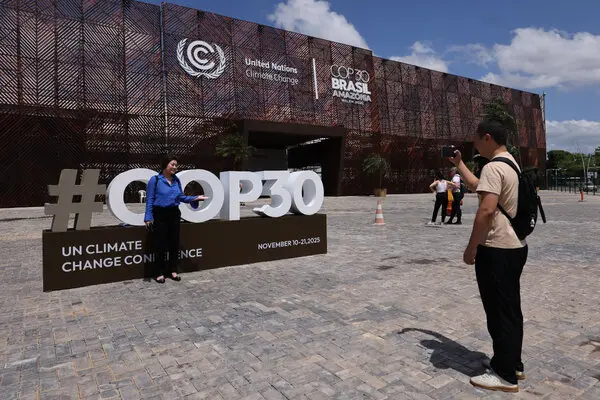
Belém, Brasil. Power Shift Africa, a leading climate policy think tank, has called on African negotiators at the ongoing COP30 climate summit to secure clear and enforceable outcomes that transform climate finance pledges into practical support for vulnerable countries.
In a new policy brief, the organisation highlighted that Africa is warming at nearly twice the global average despite contributing the least to global greenhouse gas emissions.
The warming trend is worsening droughts, floods, heatwaves, and other climate-related shocks, intensifying food insecurity, displacing communities, and straining national budgets.
Get the latest news, updates by joining our WhatsApp channel here: Join on WhatsApp.
The brief noted that Africa’s annual adaptation needs are estimated at about US$70 billion, yet the continent received only around US$14.8 billion in adaptation financing in 2023.
According to Power Shift Africa, COP30 must represent a shift from “ambition to implementation,” prioritising the delivery of climate finance, technology transfer, and capacity-building to developing countries.
A central focus, the brief said, is the Global Goal on Adaptation (GGA), urging the adoption of clear indicators to track global progress.
These indicators, it stressed, should be linked to predictable and scaled-up financing for countries with high vulnerability.
Regarding climate finance, Power Shift Africa called for a tripling of adaptation funding by 2030, delivered primarily as grants to avoid increasing public debt burdens.
The organisation also urged that the Loss and Damage Fund be adequately resourced and structured to ensure that climate-affected communities can access support directly and in a timely manner.
On discussions surrounding just transition, the brief emphasised that climate action must align with Africa’s development priorities, including energy access and job creation.
It argued that transitions away from fossil fuels should be nationally determined and designed to strengthen local economies rather than undermine them.
Furthermore, the organisation pressed negotiators to remove structural and intellectual property barriers that hinder Africa’s ability to develop climate technologies.
It underscored that the continent should not remain solely a consumer of imported technologies but must build capacity to innovate and manufacture locally.