Accra, Ghana. The Global President of the Cocoa Farmers Alliance Association of Africa (COFAAA), Comrade Adeola Adegoke, has urged African countries to take collective and decisive action to transform the continent’s cocoa industry from dependency to prosperity.
Speaking at the African Cocoa Summit and Awards 2025 held at the University of Ghana, Legon, Comrade Adegoke described the event as “a historic convergence of voices, a call for unity, and a solemn moment of truth for Africa’s cocoa sector.” The two-day summit, organised by COFAAA in collaboration with the Cocoa Roundtable Initiative (CORI), gathered government officials, private sector leaders, researchers, development partners, and farmers under the theme “Building a Sustainable Africa Cocoa Ecosystem: Unlocking Economic Potentials, Driving Inclusive Growth.”
Adegoke emphasised that Africa must move from being a raw material supplier to a producer of finished cocoa products, declaring: “Cocoa is not just a commodity; it is a livelihood, a legacy, and a lifeline for millions of African families. If Africa produces 70% of the world’s cocoa, then Africa can and must claim its rightful share of value, dignity, and prosperity.”
Get the latest news, updates by joining our WhatsApp channel here: Join on WhatsApp.
He lamented the current imbalance in the global cocoa economy, where African farmers earn less than two dollars per day while multinational processors and chocolate manufacturers capture over 90 percent of industry profits. “This is not just an economic injustice; it is a moral one. The hands that grow the cocoa should not live in poverty,” he stated.
Adegoke warned that without bold structural reforms, Africa risks losing its leadership position in global cocoa production to emerging competitors like Ecuador and Brazil, who are rapidly expanding their processing capacity and value-chain participation. He called for an end to the export of 100 percent raw beans and urged African nations to drive local processing and consumption. “Africa’s cocoa story must be rewritten by Africans, for Africans,” he declared.
COFAAA-Ghana Country Director, Mr Nana Yaw Reuben Jr., echoed this sentiment, stating that meaningful discussions on cocoa must be driven from Africa. “You cannot hold cocoa talks in Europe and expect Africa to benefit fully. Cocoa must be known as an African commodity, not a European one,” he said.
Delegates at the summit agreed that true transformation should begin with African-led policy dialogues. They outlined three major priorities: strengthening African-led cocoa governance to ensure trade standards reflect local realities; promoting local processing and industrialisation through government investment and incentives; and advancing farmer welfare and sustainability by addressing climate change, deforestation, and ageing farms.
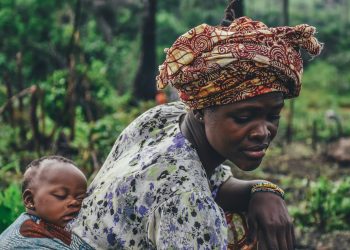
Comrade Adegoke also addressed key social challenges within the industry, including child labour, deforestation, and gender inequality. “We cannot speak of sustainability when the farmers who grow our cocoa are hungry,” he noted. He emphasised that women contribute about 70 percent of labour on cocoa farms but own only 25 percent of the land. “Our reforms must be gender-responsive, youth-driven, and inclusive,” he added.
Distinguished participants included representatives from African cocoa-producing nations, the European Union, and the United Kingdom. The Nigerian delegation was led by Dr Marcus Olaniyi Ogunbiyi, Permanent Secretary of the Federal Ministry of Agriculture and Food Security, alongside Alhaji Bukar Musa, Director of the Federal Department of Agriculture, and Ajayi Olutobaba, Deputy Director of Cocoa and Secretariat Head of the National Cocoa Management Committee (NCMC).
Development partners in attendance included Samuel Noble Quaque, Technical Advisor of the Sustainable Cocoa Initiative Programme (GIZ), and Nana Akwetey, Representative of Lutheran World Relief / Corus International. Value chain stakeholders and experts from Ghana, Nigeria, Côte d’Ivoire, and Cameroon also participated, alongside several farmers’ cooperatives from across the continent.
The event concluded with the African Cocoa Awards, honouring institutions and corporations that have advanced Africa’s cocoa development agenda. Ghana’s COCOBOD, Nigeria’s NCMC, Cameroon’s ONCC–NCBB, and Côte d’Ivoire’s Conseil du Café-Cacao received the Africa Cocoa Institution Development Champion Award for leadership and innovation in promoting sustainable cocoa production. Sunbeth Global Concepts Ltd received the Africa Cocoa Fair Trading and Sustainability Champion Award for its commitment to ethical sourcing and sustainability, the only private company to be recognised in that category.
“These institutions are not just recipients of awards; they are symbols of Africa’s determination to lead its own transformation,” Adegoke remarked. “They embody the spirit of unity and excellence that this summit represents.”
In his closing statement, Adegoke reaffirmed COFAAA’s commitment to the continent’s cocoa agenda through its PPC Framework a strategy uniting Producing, Processing, and Consuming Countries under a single cooperative vision. “This summit is not ceremonial; it is a declaration of intent,” he asserted. “We are rewriting the story of African cocoa from survival to prosperity, from vulnerability to strength, and from isolation to collaboration. The future of cocoa belongs to Africa and Africa must lead the way.”
The Cocoa Farmers Alliance Association of Africa (COFAAA) is a continental organisation dedicated to uniting cocoa farmers, strengthening cooperative systems, promoting sustainability, and advocating fair value distribution across the global cocoa value chain.