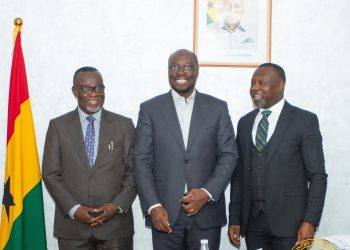
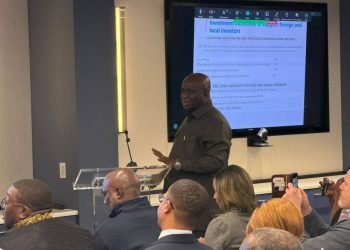
Madam Elizabeth Ofosu-Adjare, Minister of Trade, Agribusiness and Industry, has officially sworn in a nine-member board for the Ghana National Procurement Agency (GNPA) Limited, a commodity trading and distribution company tasked with ensuring a reliable supply of strategic commodities at better prices, shorter lead times, and credible local participation, in line with the Public Procurement Act and other relevant regulations.
In her address, Madam Ofosu-Adjare directed the new board to set strong governance standards, approve a board charter, develop an audit and risk strategy, constitute a human resource committee, enforce conflict of interest rules, and align its activities with government sector priorities.
She emphasised the need to adopt a GNPA strategy that supports industrialisation, the agribusiness value chain, small and emerging businesses (SEGs), exports, and the 24-hour economy.
Get the latest news, updates by joining our WhatsApp channel here: Join on WhatsApp.
She also assured the board of the ministry’s support whenever its expertise is required.
The board is chaired by Reverend Ernest Kwadwo Adjei, with members including Ivy Emefa Adiko, Carey Yaw Owusu-Anti, Edinam Kojo Asamoah, Nana Opoku Fosu Gyeabour III, Stephen Kweku Bonah, Henry Yaw Acheampong, Joseph Konadu, and Professor Frederick Dayour.
Rev. Adjei described the appointment as a call to service, requiring leadership marked by integrity and transparency. “Every decision must reflect our collective commitment to excellence and accountability.
Procurement is central to the effective and ethical functioning of public institutions,” he said, urging members to perform their duties with fairness, prudence, and a strong sense of responsibility to the nation.
He pledged that the board would uphold teamwork, professionalism, and sound governance practices in line with the ministry’s vision.
GNPA Limited traces its origins to 1976 when it was established as the Ghana National Procurement Agency (G.N.P.A) by SMCD to import selected consumer products in bulk for sale at affordable prices, serve as a procurer for government departments, and maintain buffer stocks for national food security.
In 1998, it was transformed into a limited liability company with the state as the sole shareholder.