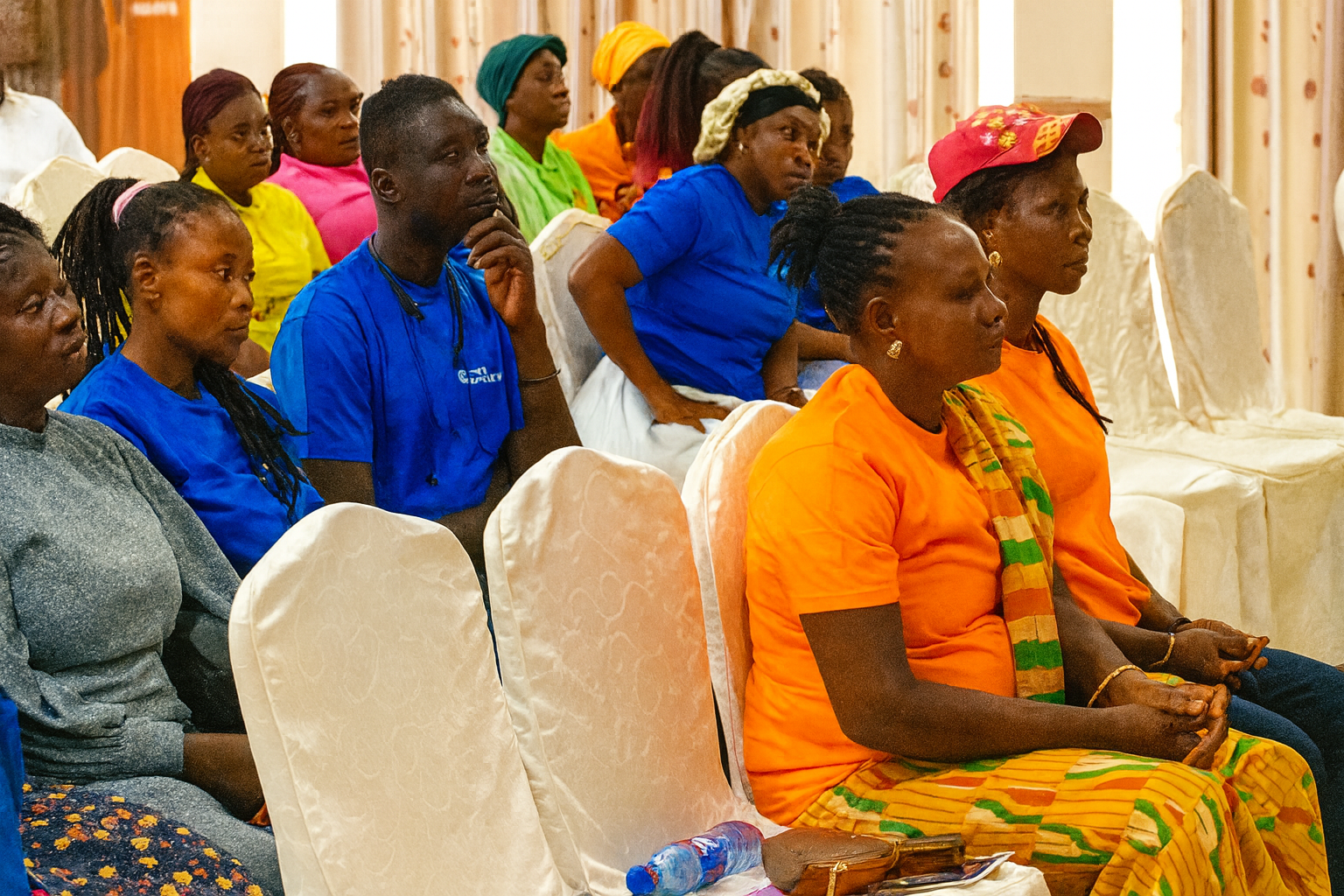
Beneficiaries of Care Ghana‘s Women for Change project have described the initiative as a practical empowerment effort that has transformed their livelihoods and improved their economic status.
According to the participants, mostly women, the project has enabled them to diversify their incomes, improve household nutrition, and strengthen community resilience.
The five-year Women for Change project (October 2020–September 2025), implemented with financial support from MARS WRIGLEY and partners, focused on four key pillars: financial inclusion, entrepreneurship development, gender equity and healthy families.
Get the latest news, updates by joining our WhatsApp channel here: Join on WhatsApp.
A total of 27,377 people, comprising 22,208 women and 5,169 men from 506 communities across seven regions, Western, Western North, Bono, Ahafo, Ashanti, Eastern and Central, took part in the initiative.
The project’s central strategy was the formation of Village Savings and Loans Associations (VSLAs), which served as a key transformative financial tool. More than 121 out of the 1,158 VSLAs formed have been linked to financial institutions in beneficiary districts and communities.
Ms. Ellen Sedziafa, Project Manager, highlighting the project’s impact at a close-out stakeholder engagement in Kumasi, said the VSLAs mobilised and saved $9.2 million over the five-year period, with $7.2 million disbursed across the groups.
She noted that financial literacy and entrepreneurial training had improved women’s access to credit, enabling them to expand their businesses and enhance farm productivity.
The gender equity and leadership component, she added, had boosted women’s involvement in decision-making at household and community levels, while the healthy families pillar was enhancing nutrition among women and their families.
Ms. Aseye Nutsukpui, Public Affairs Director of MARS WRIGLEY, said the company remained committed to improving livelihoods and sustainability in its operational areas.
She commended participants for fully embracing the project and noted that its impact would continue to benefit communities.