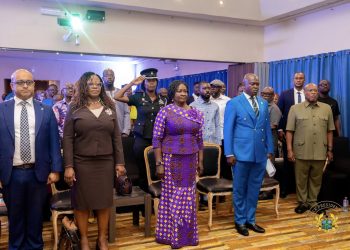
Diplomats and academic leaders at the seventh International Symposium on West African Studies (ISWAS) have called on governments in the sub-region to shift Artificial Intelligence (AI) from a popular technological catchphrase to a practical engine of equity, empowerment and resilience for sustainable socio-economic development.
The symposium, held under the theme “Sustainable Economic and Social Development in West Africa: AI Empowerment and Innovation,” is a collaboration between the University of Electronic Science and Technology of China (UESTC), the Ghana Institute of Management and Public Administration (GIMPA), and the University of Cape Coast (UCC).
Delivering a keynote address that tied AI directly to national output, the Chinese Ambassador to Ghana, Mr Tong Defa, stressed that “the true value of AI lies in its application to Ghana’s real economy.
Get the latest news, updates by joining our WhatsApp channel here: Join on WhatsApp.
” He urged participants to imagine digital infrastructure transforming operations at Tema Port, modernising cassava and cocoa cultivation, and powering the development of the Volta Economic Corridor, scenarios he said would significantly boost production efficiency and national growth.
Ambassador Tong situated his remarks within the broader framework of the recent FOCAC Summit in Beijing and the forthcoming “China-Africa Year of People-to-People Exchanges.”
He reaffirmed China’s commitment to helping developing nations close the “intelligent divide,” ensuring that West Africa gains stronger representation in global AI governance.
Welcoming delegates on November 19, the Rector of GIMPA, Professor Samuel Kwaku Bonsu, reflected on the first ISWAS held at UCC in 2017 and the subsequent Smart City-themed edition hosted by UESTC in China.
He noted that AI carries immense promise for West Africa and is poised to become a major driving force toward achieving the region’s sustainable development goals.
A former Pro-Vice Chancellor of UCC, Professor Rosemond Boohene, urged caution against adopting technology purely for efficiency. She underscored the need to equip the region’s youthful population with high-level digital skills to address persistent challenges such as climate vulnerability and educational inequalities.
As AI continues to reshape industries and governance systems, she argued, West Africa must strive not only to participate but to lead, warning that the real shortfall is not resistance to technology but the absence of a West African context in the AI landscape.
Speaking on AI’s potential within public administration, a former Head of the Local Government Service, Dr Nana Ato Arthur, called for stronger policy direction, governance frameworks and regulation to guide ethical AI use and deployment across the public sector.
The symposium featured six parallel expert seminars and brought together 56 scholars and practitioners who pushed discussions beyond policy rhetoric toward practical application.