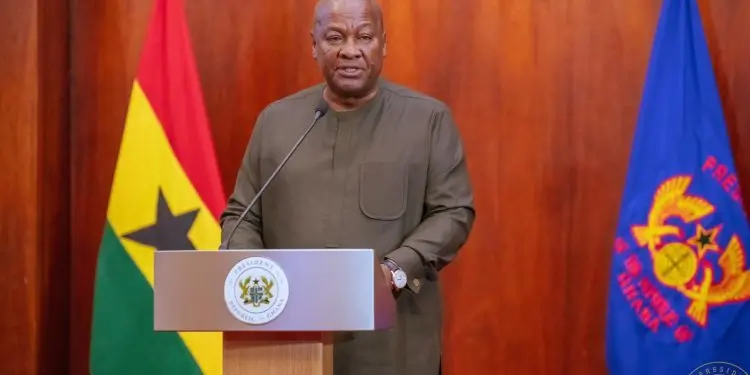
The Government will increase the District Assemblies’ Common Fund (DACF) allocation for Persons with Disabilities from three per cent to five per cent starting next year, President John Dramani Mahama has announced.
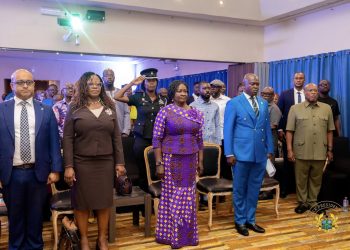
President Mahama made this known when he officially launched the Free Tertiary Education for Persons with Disability Initiative at the Accra College of Education.
He said the Disability Desks in every District Assembly, in consultation with the local branch of the Ghana Federation of the Disabled, would prepare annual budgets detailing how the allocated five per cent would be utilised.
Get the latest news, updates by joining our WhatsApp channel here: Join on WhatsApp.
The President also revealed that the government would introduce targeted programmes for women with disabilities to provide entrepreneurship grants and leadership training opportunities.
Touching on accessibility and infrastructure, President Mahama reaffirmed the government’s commitment to enforcing the Ghana Accessibility Standards for all public buildings and facilities. He noted that 2026 would mark ten years since the enforcement of accessibility standards was expected to take effect, adding that the amended Disability Act (Act 715) would impose stiffer penalties for non-compliance.
“And we will also increase the fines that offenders have to pay. Act 715 currently prescribes a penalty of three months in prison or a GHS600 fine. GHS600 is too small,” he said. “So, in the new Act, we are going to increase the penalty, and possibly extend the imprisonment term from three months to six months.”
President Mahama further disclosed that the government plans to introduce a national system for distributing rechargeable motorised wheelchairs to Persons with Disabilities.
He said he had directed all Ministers of State to review their obligations under the Disability Act and submit action plans for full compliance within the shortest possible time.
“Every year, as part of the obligations of Ministers, they will be required to provide a report on how they have complied with the Disability Act,” he added.
President Mahama called on the private sector, civil society, development partners, universities, and the media to support the national disability inclusion agenda.
“Let us transform our national attitudes from commiseration to partnership,” he urged.