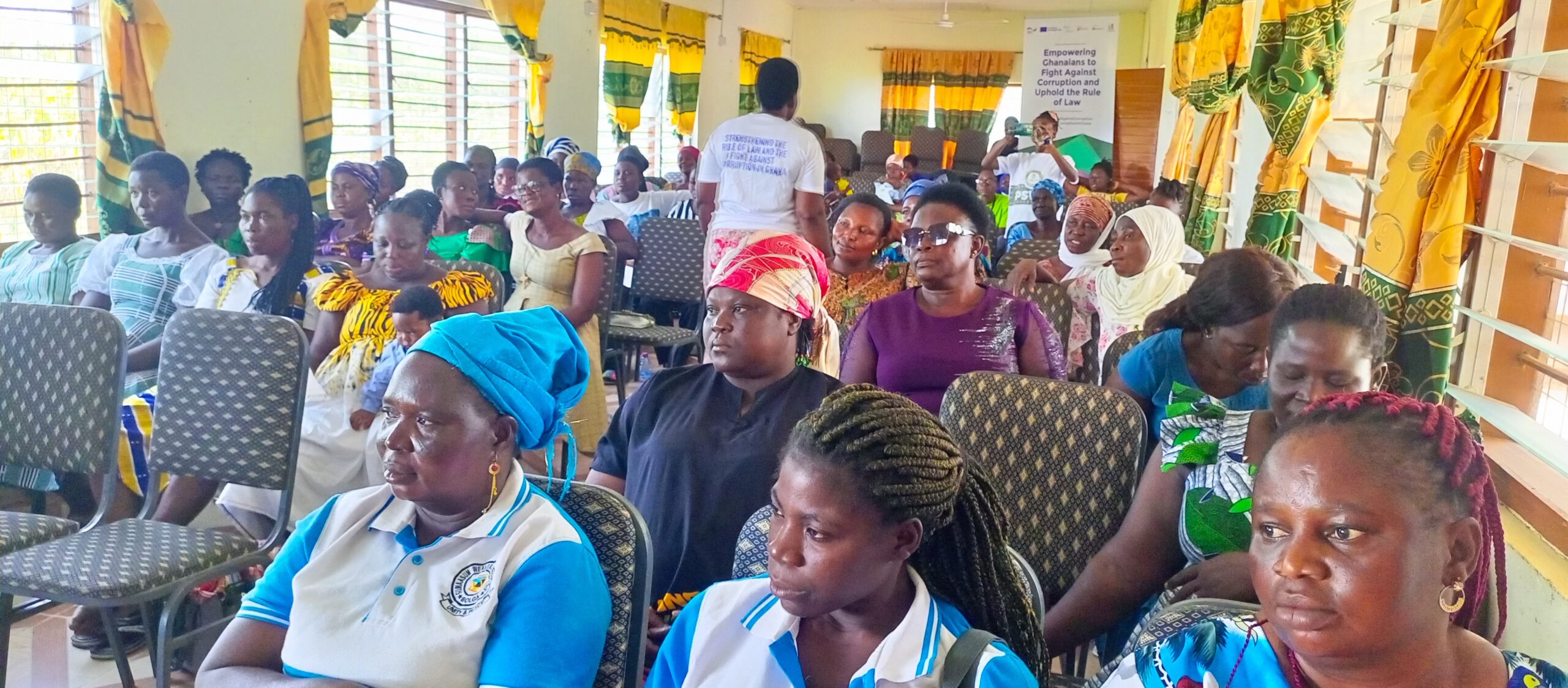
Nangodi (U/E), Oct. 22, GNA – The National Commission for Civic Education (NCCE) in the Nabdam District has convened a civic engagement session aimed at equipping women’s groups with the knowledge and skills necessary to combat corruption and uphold the rule of law within their communities. The gathering brought together 60 women, including dressmakers, hairdressers, traders, and representatives of faith-based and community organisations, alongside young women from the informal sector.
The initiative forms part of a nationwide project titled “Civic Engagements on the Rule of Law and the Fight Against Corruption,” implemented by the NCCE with funding from GIZ and co-funding from the European Union (EU).
In his welcome address, Mr Joachim Elbazar, Nabdam District Director of the NCCE, highlighted the pivotal role women play in local development, describing them as caregivers, entrepreneurs, and community leaders driving socio-economic progress in the district. He expressed concern over systemic barriers that continue to limit women’s access to education, economic opportunities, and representation in governance, increasing their vulnerability to corruption and abuse of power.
Get the latest news, updates by joining our WhatsApp channel here: Join on WhatsApp.
“Corruption, which is the abuse of trusted power for private gain, disproportionately affects women,” Mr Elbazar said, explaining that market women may face extortion through illegal levies, young women may encounter sexual harassment in exchange for services, and mothers may be compelled to pay bribes to access healthcare and education. He stressed that such experiences undermine women’s dignity while perpetuating poverty and inequality.
He further underscored the importance of the rule of law, noting that it demands accountability from all persons and institutions under fair and independently enforced laws. Strengthening women’s understanding of civic rights, legal protections, and reporting mechanisms, he said, is crucial for building communities resilient against corruption.
Deputy Superintendent of Police Joseph Salifu, Nabdam District Police Commander, spoke on “Rule of Law and Women’s Rights” and “Corruption and Women’s Vulnerability,” emphasising the need for integrity, transparency, and accountability in both public service and daily community interactions. He urged participants to act as watchdogs within their sectors.
Madam Patricia A. Ayichuru, Nabdam District Director of the Commission on Human Rights and Administrative Justice (CHRAJ), addressed “Civic Responsibility under the 1992 Constitution” and “Legal Protection and Reporting Mechanisms,” encouraging the women to be patriotic citizens. She highlighted legal frameworks such as the Whistleblower Act, the Right to Information Act, and the Office of the Special Prosecutor Act as tools for tackling corruption, stressing that their effectiveness depends on citizens actively reporting abuses. Madam Ayichuru assured participants of CHRAJ’s commitment to protecting whistleblowers and victims of injustice.
The session concluded with a call for women to leverage their civic knowledge to promote transparency, accountability, and community development, thereby strengthening local resistance to corruption and injustice.