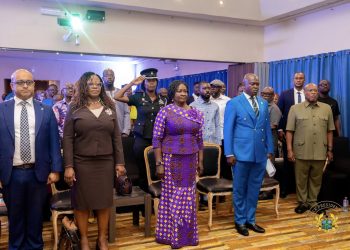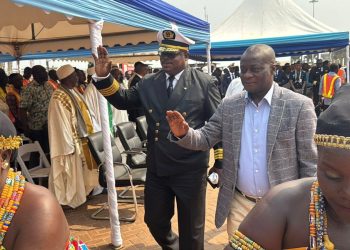
Mr Cornelius Ahiekpor, the Wassa Amenfi West Municipal Director of the National Commission for Civic Education (NCCE), has encouraged women to report corrupt practices that undermine their livelihoods and family welfare.
He said taking such a courageous step would help protect women’s rights and interests while holding perpetrators accountable for their actions.
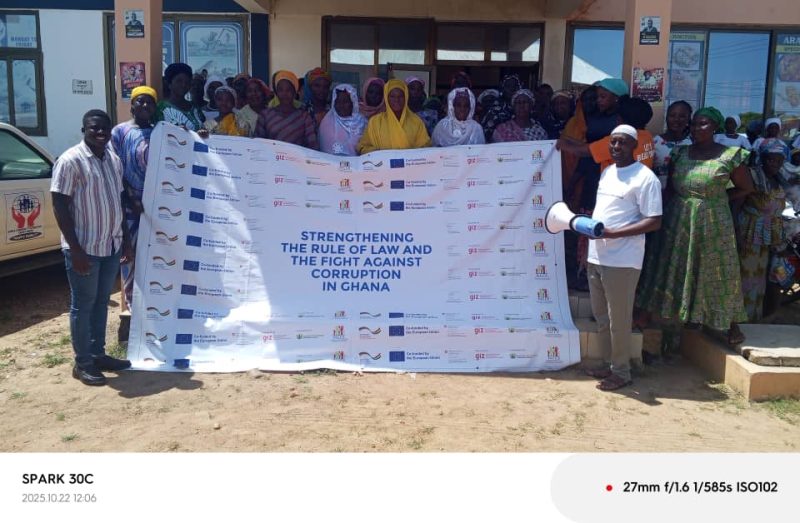
Mr Ahiekpor gave the advice at the Presbyterian Church in Asankragwa when he addressed over 100 participants from various women’s groups during an educational campaign organised for selected women in the municipality.
Get the latest news, updates by joining our WhatsApp channel here: Join on WhatsApp.
The event, held on the theme “Strengthen the Rule of Law, and the Fight Against Corruption,” formed part of the project “Civic Engagements on the Rule of Law and the Fight Against Corruption.”
The initiative falls under the Participation, Accountability, Integrity for a Resilient Democracy (PAIReD) programme, commissioned by the German Federal Ministry for Economic Cooperation and Development (BMZ) and co-financed by the European Union (EU) and the Swiss State Secretariat for Economic Affairs (SECO). It is being implemented by GIZ in collaboration with the Ministry of Finance.
Mr Ahiekpor highlighted the crucial role women play in Ghana‘s socio-economic development as caregivers, entrepreneurs, traders, and community leaders. Despite this, he said, many still face systemic barriers such as limited access to education, economic inequality, and underrepresentation in governance and decision-making processes.
He explained that the programme aims to empower women with knowledge of their civic rights and responsibilities, legal protections, and reporting mechanisms — equipping them to resist corruption, promote transparency, and participate actively in accountability processes.
Mr Ahiekpor also educated participants on their civil rights and duties as outlined in Article 41 of the 1992 Constitution.
Mr Ebenezer Twum Ampofo, the Municipal Director of the Commission on Human Rights and Administrative Justice (CHRAJ), elaborated on the effects of corruption on women and the legal frameworks protecting them, including the Whistleblower Act and the Right to Information Act.
Assistant Superintendent of Police (ASP) Juliet Nkansah, Head of the Domestic Violence and Victims Support Unit (DOVVSU) in the Wassa Amenfi West Division, provided further education on the Domestic Violence Act (Act 732) and principles of the rule of law.
The session offered participants an opportunity to share experiences and suggest solutions for enhancing transparency and accountability in their communities.
Many participants commended the NCCE and its partners for the initiative and appealed for its extension to other communities, with the inclusion of men in future sessions.